
China’s RWA Tokenization Ban vs. Hong Kong’s Consensus Optimism: Asia’s Crypto Divide Deepens
Beijing’s Latest Crackdown: Stablecoins and RWAs in the Crosshairs
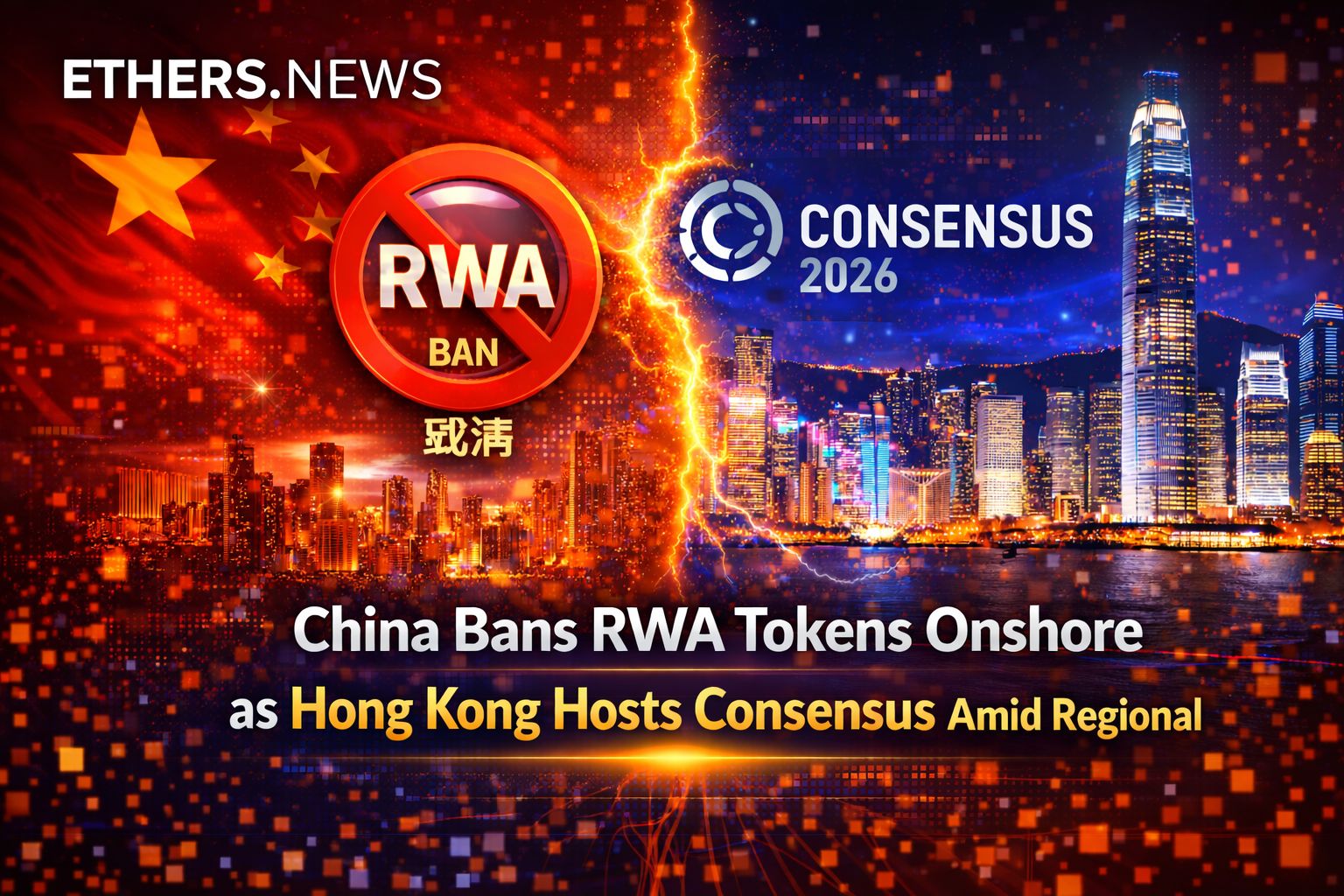
China’s State Council on February 6, 2026, approved a consensus reached with cyberspace security and judicial authorities to formalize a sweeping ban on unapproved yuan‑linked stablecoins and onshore real‑world asset (RWA) tokenization, marking the first major crypto restriction of the year. The move builds on informal guidance from the China Securities Regulatory Commission (CSRC), which in September 2025 had already instructed mainland brokerages to pause RWA tokenization activities in Hong Kong to ensure “regulatory oversight and risk control.”
The new rules explicitly prohibit domestic entities from issuing virtual currencies or tokenized assets overseas without approval, targeting fintechs and brokers seeking to tokenize treasuries, bonds, and real estate on blockchain platforms. As a Beijing‑based financial lawyer told Reuters, “Beijing doesn’t want tokenization projects moving faster than regulation can keep up. The authorities want to ensure that the risks are fully understood before allowing large‑scale rollout.”
Hong Kong’s Contrasting Path: Consensus 2026 as a Beacon
Just days after Beijing’s announcement, Hong Kong welcomed thousands to Consensus 2026, the flagship crypto conference running from February 11, featuring HKMA and SFC leaders touting the city’s stablecoin licensing regime and tokenized green bonds. Despite mainland pressure, Hong Kong has issued licenses to 77 firms since June 2025, positioning itself as Asia’s pragmatic digital asset hub with clear rules for tokenized funds, securities, and wholesale CBDC experiments via Project Ensemble. Forbes
HKMA’s efforts include delivery‑versus‑payment (DvP) settlements and tokenized deposits, with mainland firms like GF Securities and China Merchants Bank International having launched projects before the CSRC pause. Consensus sessions highlighted “HK users favor stablecoins for RWA tokenization,” with green bonds on blockchain as a flagship use case, signaling resilience despite Beijing’s caution.
China’s Long Crypto Clampdown: From 2021 Ban to 2026 Formalization
Beijing’s stance reflects a decade‑long evolution. The 2021 ban on crypto trading and mining was followed by August 2025 instructions to halt stablecoin research and September’s RWA pause in HK. The February 6 rules lock in these restrictions, adding yuan‑stablecoin bans and oversight for offshore issuance, driven by risks of speculation, capital flight, and financial instability.
Christian Ruz of Hype noted, “Chinese investors are already adept at navigating these restrictions and recognize that the risks of holding renminbi are higher than those linked to U.S.‑pegged stablecoins,” suggesting minimal immediate market impact since most activity is global. Yet the ban reinforces mainland priorities: control over innovation, preventing crypto from challenging monetary sovereignty.
Hong Kong’s Sandbox: Licensed Innovation Amid Mainland Pressure
Hong Kong’s SFC has outlined public tokenized funds and securities, while HKMA’s Project Ensemble experiments with PvP/DvP and wCBDC. Despite CSRC guidance to pause, HK continues as a hub, with 77 stablecoin license applications and tokenized bond issuances like China Merchants’ 500M yuan deal. Forbes
Consensus 2026 emphasized HK’s edge: “Global RWA Summit commences with HK government support,” focusing on green bonds and liquidity via stablecoins. Beijing’s intervention buys time for alignment but underscores capital markets policy must harmonize, even if digital assets diverge.
Japan Emerges as Asia’s Crypto Leader
Japan is capitalizing on the split, with its 20% crypto tax and clear reg framework positioning it ahead of Singapore and HK. ET Markets (Feb 20) highlights Japan’s institutional growth, contrasting China’s bans. Singapore tightens while Japan leads in compliance and adoption.
RWA market projections—$29B today to $2T by 2030—underscore the stakes, with Japan attracting flows shunned by China.
Risks and Global Flows: Gulf–Asia, EU–Asia Corridors
China’s ban disrupts Gulf–Asia and EU–Asia RWA flows, pushing activity to HK/Japan. HK’s framework ensures tokenized products aren’t marketed to mainland without safeguards.
Consensus 2026 signals HK’s resilience, but Beijing’s control limits scale. Asia’s divide—China’s caution vs. HK/Japan’s pragmatism—shapes global crypto geography.
Outlook: Alignment or Divergence?
Beijing’s Feb 6 rules buy time for oversight, but HK’s Consensus momentum suggests divergence. Japan gains as Asia’s compliance leader. Asia’s split highlights regulation’s role in innovation—China prioritizes control, HK/Japan balance it with growth. Economic times
About the Author
Jeffrey Mathew
Jeffrey is a blockchain journalist for ethers.news, specializing in decentralized finance (DeFi) and Ethereum governance and Cryptocurrencies
-At Ethers.News, we are committed to delivering accurate, transparent, and well-researched information related to cryptocurrency, blockchain, and digital assets. Our content is created for educational and informational purposes only and should not be considered financial, investment, or legal advice. We encourage readers to conduct their own research and consult with qualified professionals before making any financial decisions. Market conditions can change rapidly, and past performance does not guarantee future results. Our goal is to promote informed decision-making through responsible journalism.