
Sonic Labs Launches USSD: RWA-Backed Stablecoin to Rescue a Collapsing DeFi Ecosystem
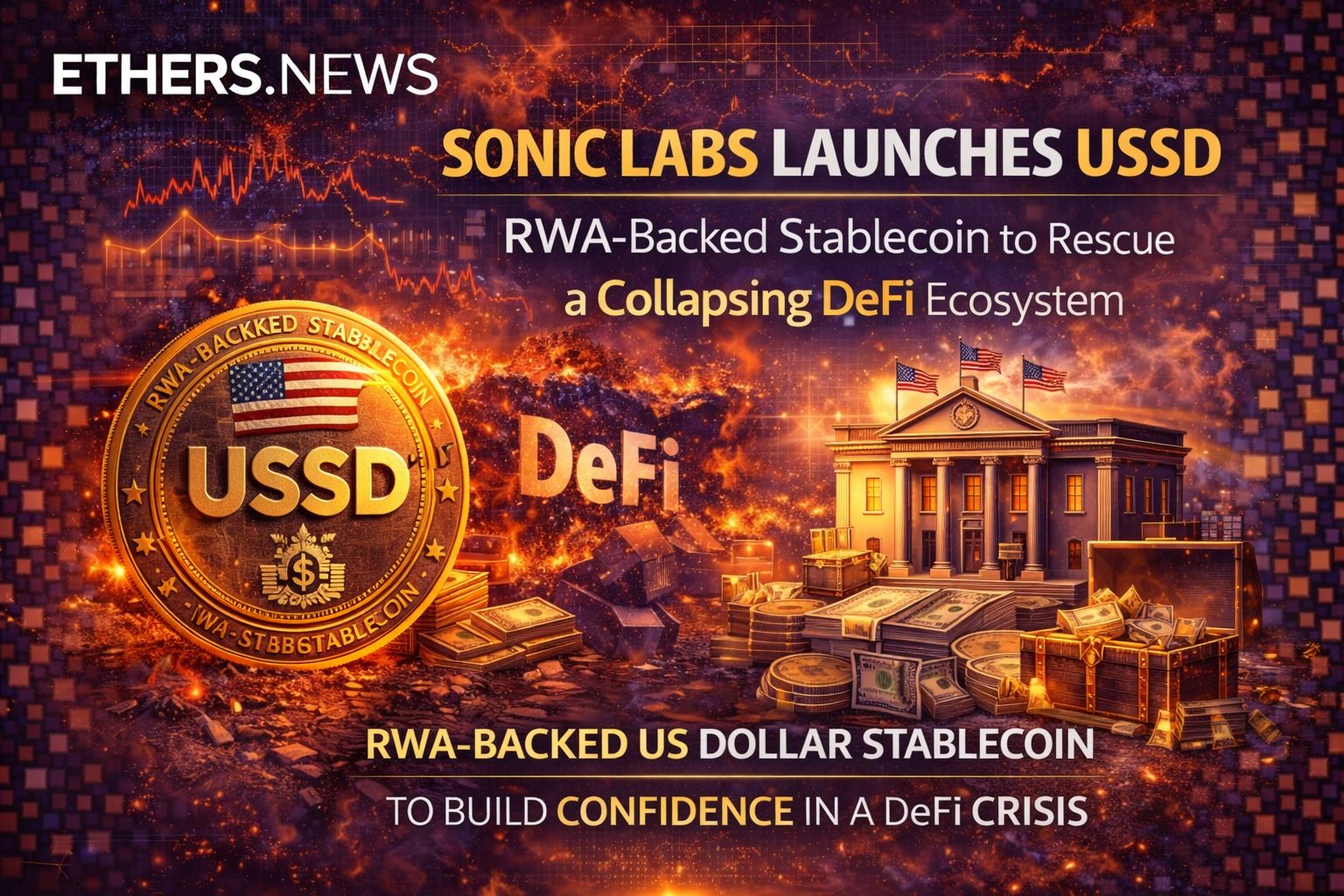
Sonic Labs has unveiled USSD, a revolutionary real-world asset (RWA)-backed stablecoin designed to breathe new life into its rapidly deteriorating DeFi ecosystem. This launch comes at a critical juncture, as Sonic's total value locked (TVL) has plummeted from a peak of $1.1 billion in May 2025 to just $34 million today—a staggering 97% decline that has shaken investor confidence across the sector. The USSD stablecoin, pegged 1:1 to the U.S. dollar, leverages tokenized short-term U.S. Treasury assets from industry giants BlackRock, WisdomTree, and Superstate. Built on Frax Finance's proven frxUSD infrastructure, USSD offers institutional-grade stability in an ecosystem desperate for reliable liquidity primitives.
The Crisis in Sonic's DeFi Ecosystem
The DeFi Catastrophe Gripping Sonic Labs Sonic's blockchain promised unparalleled speed and scalability, positioning itself as a formidable Layer 1 contender. However, a perfect storm of factors has led to its dramatic downfall. The native S token now trades at a mere $0.04, representing a 96% drop from its all-time high of $1.03 just months ago.
Leadership instability compounded the crisis. In February 2026, CEO Mitchell Demeter and Head of Business Development Evan Owens abruptly departed, leaving the board to steer the ship temporarily. Sonic Labs' ecosystem update halted popular initiatives like "Meme Season," redirecting resources toward core infrastructure survival. This collapse mirrors broader DeFi challenges: liquidity fragmentation, regulatory uncertainty, and waning retail speculation. Sonic's TVL freefall from $1.1 billion to $34 million underscores the urgent need for sustainable financial infrastructure rather than hype-driven growth.
Introducing USSD: Institutional-Grade Stability
Institutional Stability Meets Blockchain Innovation At its core, USSD represents Sonic Labs' bold vertical integration strategy. Rather than depending on external stablecoin issuers, Sonic now controls its own financial primitives. Users can mint USSD fee-free by depositing USDC or USDT, creating seamless on-ramps for existing liquidity. LayerZero technology enables frictionless cross-chain transfers across Ethereum, Arbitrum, Base, and over ten other networks. This multi-chain accessibility addresses Sonic's isolation problem, allowing capital to flow freely between ecosystems. Treasury yields generated by USSD reserves remain within the Sonic ecosystem, funding developer grants, liquidity incentives, and strategic S token buybacks.
USSD represents a concrete step in Sonic Labs' broader vertical integration strategy, which aims to embed core financial infrastructure directly into the Sonic blockchain rather than relying on third-party stablecoin issuers. This launch marks the beginning of Sonic owning its financial stack." -Sonic Labs Official Announcement
The stablecoin's RWA backing provides unmatched transparency. Reserves comprising tokenized U.S. Treasuries undergo regular audits, offering users institutional-grade assurance absent in algorithmic failures like Terra Luna. Frax Finance's battle-tested infrastructure further mitigates smart contract risks that plague newer protocols.
Technical Backbone and Security Features
Frax Finance's frxUSD framework serves as USSD's technical backbone, proven resilient through multiple market cycles. This overcollateralized model sidesteps the vulnerabilities of unbacked algorithmic stablecoins that spectacularly imploded during past bear markets. Cross-chain interoperability via LayerZero eliminates liquidity silos, enabling USSD to compete directly with dominant stablecoins like USDT and USDC. Smart contract audits from top security firms and time-locked reserve mechanisms enhance trust, critical for institutional adoption. Regulatory alignment represents another strategic advantage. Tokenized U.S. Treasuries position USSD favorably amid evolving stablecoin legislation across jurisdictions. Recent U.S. state-level bills and Florida's stablecoin framework signal growing regulatory clarity that benefits compliant RWA projects.
Reviving Liquidity and User Activity
Reviving Sonic's Ecosystem Stablecoins serve as DeFi's lifeblood, enabling everything from trading pairs to lending protocols. USSD targets Sonic's most pressing pain point: the absence of reliable base liquidity. Zero-fee minting during the launch phase incentivizes liquidity providers to bootstrap trading pairs and lending markets. In-ecosystem yield retention creates a virtuous cycle. Treasury-generated returns fund dApp development grants, liquidity mining programs, and S token deflationary mechanisms. As protocol activity increases, organic demand for USSD grows, creating network effects that could reverse Sonic's downward spiral. Multi-chain accessibility attracts capital from Ethereum's mature DeFi ecosystem and emerging Layer 2 networks. This cross-pollination strategy counters Sonic's isolation, positioning USSD as a neutral liquidity hub rather than a chain-specific asset.
Broader Implications for RWA and DeFi
DeFi's Path to Institutional Adoption USSD exemplifies the seismic shift toward real-world asset tokenization in DeFi. Post-Terra collapse, the industry has pivoted toward overcollateralized and RWA-backed models. BlackRock's involvement underscores institutional finance's accelerating embrace of blockchain infrastructure. Sonic's approach signals a broader Layer 1 trend: owning the full financial stack rather than renting from centralized issuers. This vertical integration mirrors traditional finance conglomerates while maintaining blockchain's permissionless ethos. Success here could inspire competing chains to develop native stablecoins. Challenges remain formidable. USDT and USDC's first-mover dominance creates high barriers to adoption. Network effects favor incumbents, requiring USSD to deliver superior utility and yields. Transparent reserve reporting and consistent peg stability will prove make-or-break factors.
Competitive Landscape and Market Positioning
The stablecoin market remains fiercely competitive, with Circle's USDC commanding institutional preference and Tether's USDT dominating trading volume. USSD differentiates through native chain integration and RWA transparency, targeting DeFi power users rather than retail speculators. Frax Finance's reputation provides credibility, while BlackRock's backing appeals to institutions wary of crypto-native issuers. Sonic's high-throughput architecture offers technical advantages for high-frequency DeFi applications, potentially attracting sophisticated trading strategies. Regional regulatory dynamics add complexity. While U.S. clarity benefits RWA compliance, global jurisdictions present varied requirements. USSD's multi-chain strategy hedges these risks by diversifying adoption pathways across compliant ecosystems.
BottomLine
Sonic Labs' USSD launch represents a calculated lifeline for a DeFi ecosystem on life support. The RWA-backed model addresses core stability concerns while treasury yields create sustainable ecosystem funding. Leadership's vertical integration bet rejects reliance on external stablecoin monopolies, positioning Sonic for potential resurgence.
This pivot from speculative meme-driven growth to institutional-grade infrastructure merits cautious optimism. USSD addresses Sonic's existential liquidity crisis with credible backing and sound technical architecture. While crowded stablecoin markets pose adoption hurdles, native chain advantages and yield mechanisms create genuine competitive differentiation. We rate this strategic realignment Bullish with Execution Risk, monitoring TVL recovery and peg stability as definitive success metrics.
In journalistic tradition, USSD exemplifies blockchain's maturation beyond hype cycles toward sustainable financial infrastructure. Sonic's survival may preview essential strategies for Layer 1 chains navigating 2026's capital efficiency demands.
Primary Sources & References
MEXC News: "Sonic Labs Launches USSD Stablecoin to Reboot Network Liquidity" (March 9, 2026)
AInvest: "Sonic Labs Launches Web-native Stablecoin USSD Backed by Tokenized Treasuries" (March 9, 2026)
AInvest: "Sonic Launches USSD Stablecoin Backed by U.S. Treasury Assets" (March 8, 2026)
KuCoin News: "Sonic Labs Launches Native USD Stablecoin USSD Backed by U.S. Treasury Assets" (March 8, 2026)
Stabledash: "Sonic Labs Launches Treasury-Backed USSD Stablecoin Built on Frax Infrastructure" (March 9, 2026)
MEXC News: "Sonic Labs Launches USSD Stablecoin Backed by Tokenized U.S. Treasuries" (March 9, 2026)
Sonic Labs Official Announcements and ecosystem updates (February-March 2026)
DeFiLlama TVL Data: Sonic ecosystem metrics (Accessed March 2026)
CoinMarketCap/CoinGecko: S token price tracking and market dataAbout the Author
Ethers News
Ether News Team - Highly dedicated to provide up to date crypto related news and upcoming events.
-At Ethers.News, we are committed to delivering accurate, transparent, and well-researched information related to cryptocurrency, blockchain, and digital assets. Our content is created for educational and informational purposes only and should not be considered financial, investment, or legal advice. We encourage readers to conduct their own research and consult with qualified professionals before making any financial decisions. Market conditions can change rapidly, and past performance does not guarantee future results. Our goal is to promote informed decision-making through responsible journalism.