
State of Current Blockchain Implementation in World Ecosystem
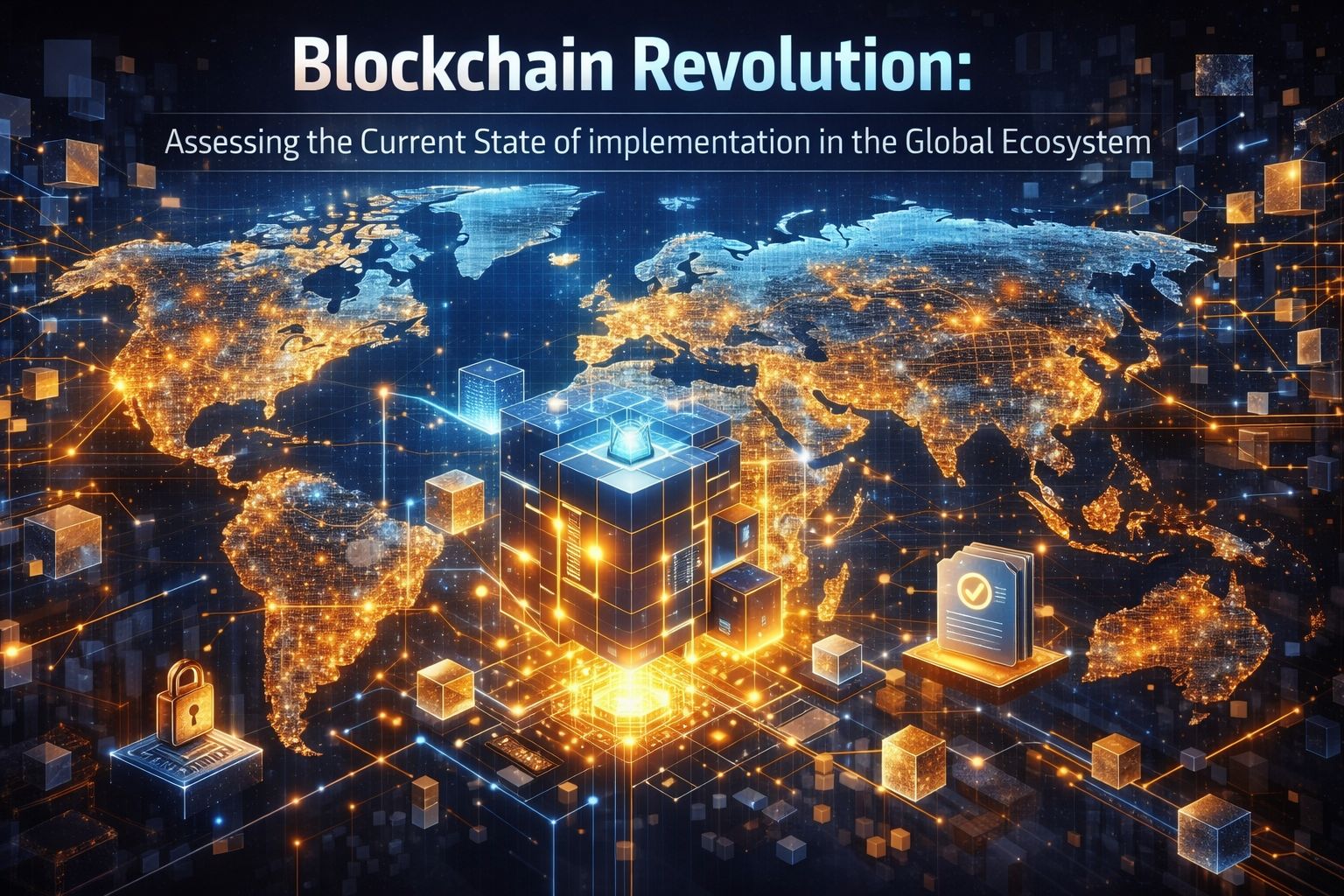
State of Current Blockchain Implementation in World Ecosystem
By Ethers.news
Blockchain technology has evolved from an experimental innovation powering cryptocurrencies into a foundational infrastructure layer reshaping global industries. What began as a decentralized ledger concept is now influencing finance, governance, supply chains, healthcare, digital identity, and enterprise systems across the world ecosystem.
Today’s blockchain landscape reflects a transition from speculation to structured implementation. Governments, corporations, startups, and financial institutions are integrating distributed ledger technologies into real-world applications with measurable economic and operational impact.
Financial Services and Decentralized Finance
The financial sector remains the most mature domain of blockchain implementation. Decentralized Finance (DeFi) platforms enable lending, borrowing, asset trading, derivatives markets, and liquidity provisioning without traditional intermediaries.
Smart contract-based protocols provide automated settlement, transparent collateralization, and algorithmic interest systems. Stablecoins facilitate cross-border payments and serve as digital liquidity bridges between traditional banking and blockchain networks.
Major financial institutions are also exploring tokenized securities, digital bonds, and blockchain-based clearing systems to reduce operational inefficiencies and counterparty risk.
Central Bank Digital Currencies (CBDCs)
Governments worldwide are researching or piloting Central Bank Digital Currencies (CBDCs). These state-backed digital currencies leverage distributed ledger infrastructure to improve payment efficiency, financial inclusion, and monetary transparency.
While not fully decentralized, CBDCs demonstrate how blockchain-inspired architecture is influencing sovereign monetary systems and reshaping public-sector financial innovation.
Supply Chain and Logistics
Blockchain enhances supply chain transparency by providing immutable tracking of goods from origin to delivery. Industries such as agriculture, pharmaceuticals, and luxury goods use blockchain to combat counterfeiting, improve traceability, and optimize logistics.
Real-time data sharing among manufacturers, distributors, and retailers reduces friction while improving compliance with regulatory and quality standards.
Healthcare and Medical Data
In healthcare ecosystems, blockchain supports secure patient data management, pharmaceutical tracking, and research collaboration. Decentralized data storage models improve privacy control while reducing unauthorized access risks.
Interoperability between institutions becomes more efficient when data access permissions are encoded within blockchain-based systems.
Enterprise Blockchain Adoption
Corporations are implementing permissioned blockchain networks to enhance transparency, streamline internal operations, and reduce administrative overhead. These private or hybrid networks allow controlled participation while retaining distributed ledger benefits.
Enterprise adoption focuses on cost reduction, automation, audit efficiency, and cross-border operational alignment.
Digital Identity and Web3 Infrastructure
Blockchain-based digital identity systems are emerging as a core component of Web3 infrastructure. Self-sovereign identity models allow individuals to control credentials without centralized authorities.
This shift has implications for online authentication, governance systems, and secure digital interactions across global platforms.
Environmental and Sustainability Applications
Blockchain is increasingly used to tokenize carbon credits, track renewable energy certificates, and verify environmental compliance. Transparent tracking mechanisms reduce fraud and improve accountability in sustainability initiatives.
With the transition of major networks toward energy-efficient consensus mechanisms, environmental impact concerns are gradually being addressed.
Challenges in Global Implementation
Despite rapid growth, blockchain implementation faces several challenges:
Regulatory uncertainty across jurisdictions
Scalability and transaction throughput limitations
Interoperability between blockchain networks
Security vulnerabilities in smart contracts
User adoption and technical complexity
Addressing these challenges requires collaboration between regulators, developers, enterprises, and policymakers to establish standardized frameworks and best practices.
The Future Outlook
The global ecosystem is shifting toward hybrid integration models where blockchain complements existing infrastructure rather than replacing it entirely. Tokenization, programmable finance, digital identity, and decentralized governance are likely to define the next phase of implementation.
As scalability solutions mature and regulatory clarity improves, blockchain technology will continue evolving into a core infrastructure layer supporting digital economies worldwide.
Conclusion
The current state of blockchain implementation reflects a technology moving beyond hype into structured, measurable adoption. From financial systems to healthcare networks and enterprise operations, blockchain is steadily integrating into the global ecosystem.
The transformation is ongoing — and its long-term impact will likely redefine how value, data, and trust are managed in the digital age.
Tags
About the Author
Jeffrey Mathew
Jeffrey is a blockchain journalist for ethers.news, specializing in decentralized finance (DeFi) and Ethereum governance and Cryptocurrencies
-At Ethers.News, we are committed to delivering accurate, transparent, and well-researched information related to cryptocurrency, blockchain, and digital assets. Our content is created for educational and informational purposes only and should not be considered financial, investment, or legal advice. We encourage readers to conduct their own research and consult with qualified professionals before making any financial decisions. Market conditions can change rapidly, and past performance does not guarantee future results. Our goal is to promote informed decision-making through responsible journalism.