
X Turns Timelines Into Trading Terminals: Smart Cashtags, X Money and the Next Wave of Crypto Adoption
From Tweets to Trades: What X Just Announced
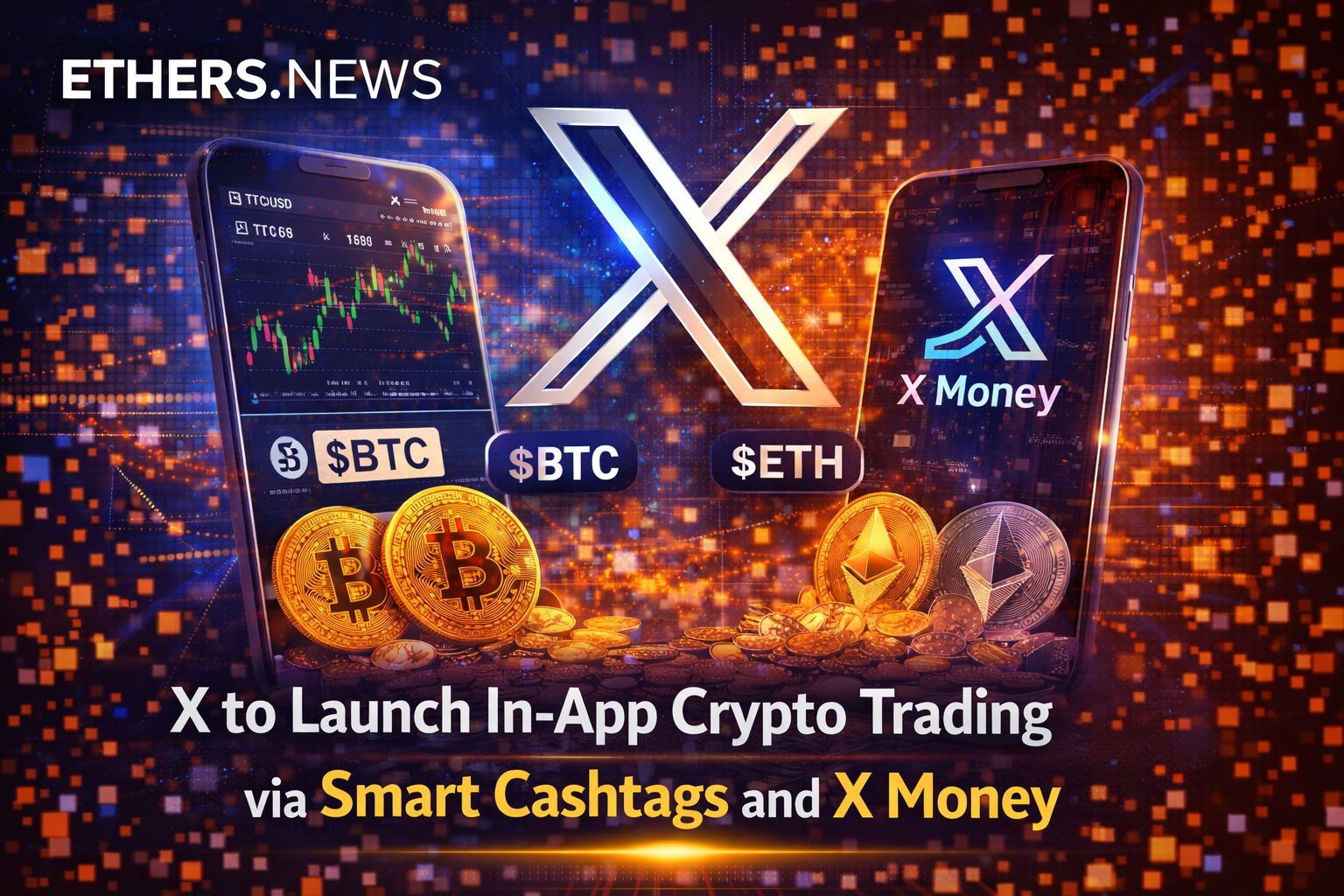
In mid‑February 2026, X’s head of product Nikita Bier confirmed that crypto and stock trading tools will be available “in the next couple of weeks,” marking the first full integration of trading into the main X feed. The core feature is Smart Cashtags, an evolution of the old ticker‑search function that now displays live market data and, crucially, a trade button inside posts and search results. Users will be able to tap a cashtag for Bitcoin, Ether or a stock, see a price chart and order interface, and initiate a trade without leaving the app.
Bier has clarified that X will not act as a broker‑dealer or exchange itself; instead, it will provide the interface, data, and routing links, while regulated partners handle execution, custody, and KYC. That model mirrors earlier experiments such as X’s 2023 partnership with eToro on real‑time quotes and investment links, but goes much further by embedding execution into the heart of the social experience.
Inside Smart Cashtags: How Trading From the Feed Will Work
Smart Cashtags are essentially enriched ticker tags: when users type a cashtag like $BTC or $TSLA, X now surfaces live prices and charts, and will soon add “Buy” and “Sell” entry points tied to partner platforms. According to a KuCoin technical breakdown, the design goal is to collapse the gap between information and action—taking a workflow that used to require switching from X to an exchange app and compressing it into a single tap from the timeline. Supported assets at launch are expected to include major cryptocurrencies such as Bitcoin and Ethereum alongside large‑cap US equities, with coverage expanding over time.
Execution will be powered by a combination of API integrations and deep links: X renders the UI and price feed, collects user intent (for example, market buy of a certain notional), and then pushes that to a brokerage or exchange account the user has linked behind the scenes. This approach allows X to position itself as a “financial data and access layer” rather than a full broker, which both limits its regulatory burden and makes it easier to roll the feature out in multiple jurisdictions via different partners.
“What X is building is a social trading surface: prices, commentary, and execution all live in the same scroll, which is exactly where younger investors already spend their time.”
— Independent fintech analyst, commenting on the Smart Cashtags launch
X Money: The Payments Rail Behind the Trading Push
Underpinning this trading layer is X Money, a digital payments system that Musk says is already in internal beta and should reach limited public release within the next two months. X Money is designed to provide P2P transfers, in‑app wallets, and instant settlements, with Visa acting as a key infrastructure partner for card linking, KYC/AML compliance and cross‑border capabilities. Over the past year, X has secured money‑transmission licenses in dozens of US states, laying the legal groundwork for a payments business that can support both fiat and, eventually, crypto flows. )
An eMarketer briefing describes X Money as the backbone of Musk’s super‑app ambitions, bundling payments and financial tools into the same environment where users already chat, consume news and follow creators. In practice, that could mean a single X wallet funding P2P transfers, subscription payments to creators, in‑app tipping, and the collateral or cash leg for trades executed via Smart Cashtags. If it scales, X would start to look less like a social network and more like a fintech‑plus‑media platform competing directly with neobanks and payment apps for both user attention and transaction volume.
Musk’s “Everything App” Vision and Why Crypto Sits at the Center
Elon Musk has repeatedly framed his goal for X as building a Western analogue to China’s WeChat—a single “everything app” where users can message, shop, pay bills and invest, all without leaving the platform. Crypto has always been part of that story: from Tesla’s Bitcoin purchases to Musk’s public enthusiasm for Dogecoin, he has positioned digital assets as native money for the internet age. DL News reports that Musk recently described X Money as “the place where all the money is” and “the central source of all monetary transactions,” underscoring his intent to make financial activity a core part of the product, not an add‑on.
KuCoin’s analysis argues that the combination of Smart Cashtags and X Money effectively turns X into a “social finance” hub, where discussions, memes and breaking news are directly linked to order flow in crypto and stocks. For digital assets in particular, this could act as a powerful on‑ramp: instead of needing to discover an exchange, complete KYC, learn a complex interface and then trade, new users might simply tap a cashtag in a viral post and be guided through a streamlined onboarding flow tied to their existing X identity.
What This Means for Banks, Brokers and Exchanges
Traditional financial institutions are watching closely. eMarketer notes that whether or not X fully succeeds as a super‑app, it illustrates the competitive pressure banks face for user engagement, as big tech and social platforms bundle financial tools into richer experiences. While X is unlikely to replace primary banking relationships in the near term, it can siphon off everyday use cases such as small investments, P2P transfers, and impulse trades—areas where banks and even some brokers have been slow to innovate.
For crypto exchanges, the trade‑off is more nuanced. On one hand, being integrated as an execution partner for Smart Cashtags could deliver massive organic traffic and order flow, especially for mobile users in regions where X has strong penetration. On the other hand, X sits between exchanges and end‑users at the UX layer, which could dilute brand visibility and customer loyalty, turning some exchanges into invisible plumbing behind X’s interface. Over time, that could concentrate power in whichever platforms win X’s partnership slots, while raising the bar for smaller competitors trying to reach retail audiences directly.
Regulation, Risk and Spam: Open Questions
Regulators are almost certain to scrutinize X’s expansion into finance. DL News reports that X is explicitly distancing itself from core brokerage functions—Bier has stressed that the company is “just building the financial data tools and links” and will not itself act as a broker. That design is intended to keep the heaviest MiFID‑, SEC‑ or FCA‑style obligations on regulated partners, but as history with “payment initiation” and “robo‑advice” front‑ends shows, supervisors can still impose conduct rules on UX providers that materially influence investment behavior.
There are also platform‑integrity risks. Bier has already flagged the need to curb spammy and coercive behavior around speculative tokens, stating that X will update API policies to block apps that create fee pools for non‑consenting users. The concern is that if trading sits one tap away from engagement, bad actors will aggressively game trends, hashtags and replies to push low‑quality or outright fraudulent coins to inexperienced users. Balancing openness with safeguards—rate‑limiting promotions, labeling sponsored cashtags, or integrating risk warnings—will be critical if X wants to avoid becoming the next generation’s pump‑and‑dump playground.
Potential Impact on Crypto Markets and Retail Adoption
From a market‑structure perspective, X’s move could change both the scale and rhythm of crypto flows. KuCoin’s report estimates that social trading is already a multi‑billion‑dollar niche, projected to grow to over $5 billion by 2030, and embedding trading inside X could accelerate that trend by orders of magnitude given the platform’s hundreds of millions of monthly users. In the short term, analysts expect heightened intraday volatility in assets that trend on X—memecoins, narrative tokens, and large caps tied to Musk commentary—as the distance between seeing a post and firing an order shrinks to seconds.
Over the medium term, easier access could expand the addressable market for regulated crypto products. Users who first interact with BTC or ETH through small trades on X might later graduate to deeper engagement via ETFs, on‑chain wallets, or DeFi platforms, creating a wider funnel for the entire ecosystem. At the same time, the concentration of retail attention and order flow on a single platform amplifies key‑person and platform‑risk: policy changes by Musk, outages at X, or regulatory interventions could all have outsized effects on sentiment and liquidity.
What to Watch in the Coming Weeks
Several milestones will determine how transformative this launch actually becomes. First is the initial geography and partner list: will X start with US users only, or roll out in multiple markets at once, and which brokers and exchanges win the first integration slots? Second is the scope of asset support at launch—if only a narrow set of blue‑chip coins and stocks are tradable via Smart Cashtags, the impact on broader altcoin liquidity may be limited at first.
Third is the pace of X Money’s rollout and licensing. A smooth public beta with reliable KYC, funding and withdrawal flows will give regulators more confidence and make it easier to layer on additional financial services, from lending to more advanced crypto features. Finally, the market will watch how quickly users adopt trading from the feed: if meaningful volumes materialize and engagement surges around cashtags, X could rapidly become one of the most important distribution channels in retail finance—and a major new vector for crypto adoption in 2026 and beyond. Aalphanode
About the Author
Jeffrey Mathew
Jeffrey is a blockchain journalist for ethers.news, specializing in decentralized finance (DeFi) and Ethereum governance and Cryptocurrencies
-At Ethers.News, we are committed to delivering accurate, transparent, and well-researched information related to cryptocurrency, blockchain, and digital assets. Our content is created for educational and informational purposes only and should not be considered financial, investment, or legal advice. We encourage readers to conduct their own research and consult with qualified professionals before making any financial decisions. Market conditions can change rapidly, and past performance does not guarantee future results. Our goal is to promote informed decision-making through responsible journalism.