
Category: RWA

Congress Holds Its Most Consequential Capital Markets Hearing in a Generation: SIFMA, Blockchain Association, Nasdaq, and DTCC Testify on Tokenization Today as the CLARITY Act Markup Window Narrows and America's $16 Trillion Securities Infrastructure Faces Its Blockchain Reckoning
March 25, 2026: The United States House Financial Services Committee is convening its most consequential tokenization hearing in congressional history this morning — "Tokenization and the Future of Securities: Modernizing Our Capital Markets" — at 10:00 AM ET in Room 2128 of the Rayburn House Office Building. Witnesses testifying before the full committee include Kenneth Bentsen Jr., President and CEO of SIFMA, the Securities Industry and Financial Markets Association representing America's broker-dealers, investment banks, and asset managers; Summer Mersinger, CEO of the Blockchain Association, who has been central to both the CLARITY Act negotiations and the SEC-CFTC digital asset taxonomy process; and executives from Nasdaq and the DTCC. The Modernizing Markets Through Tokenization Act of 2026 has been formally noticed for the session. The hearing arrives four days after the SEC approved Nasdaq's proposal to allow tokenized securities to trade alongside traditional shares on the same order book, and fewer than four weeks before the Senate Banking Committee's expected April markup of the CLARITY Act — with Senator Bernie Moreno warning that failure to reach the Senate floor by May could freeze digital asset legislation for years.

EY-Parthenon and Coinbase's 2026 Institutional Survey Confirms the Structural Shift: 73% of Global Institutions Are Increasing Crypto Allocations, 86% Are Adopting Stablecoins, and Asset Manager Tokenization Interest Has Surged 60% Year-on-Year — Volatility Sharpens Discipline Rather Than Dampening Conviction
The 2026 EY-Parthenon and Coinbase survey (351 institutional investors, January 2026): 73% plan to increase crypto allocations in 2026; 74% expect prices to rise in 12 months. 86% use or explore stablecoins — 85% cite payments/treasury as primary use cases. USDC overtook USDT as most-used stablecoin. 83% say GENIUS Act will increase financial institution stablecoin engagement; 69% expect broader stablecoin transaction adoption. Asset manager tokenization interest: 40% (2025) to 64% (2026). 63% interested in tokenized assets. 78% cite market structure as top regulatory clarity need. 81% favor regulated spot vehicles. 66% prioritize compliance/security in custody. 61% use multi-custodian strategies.
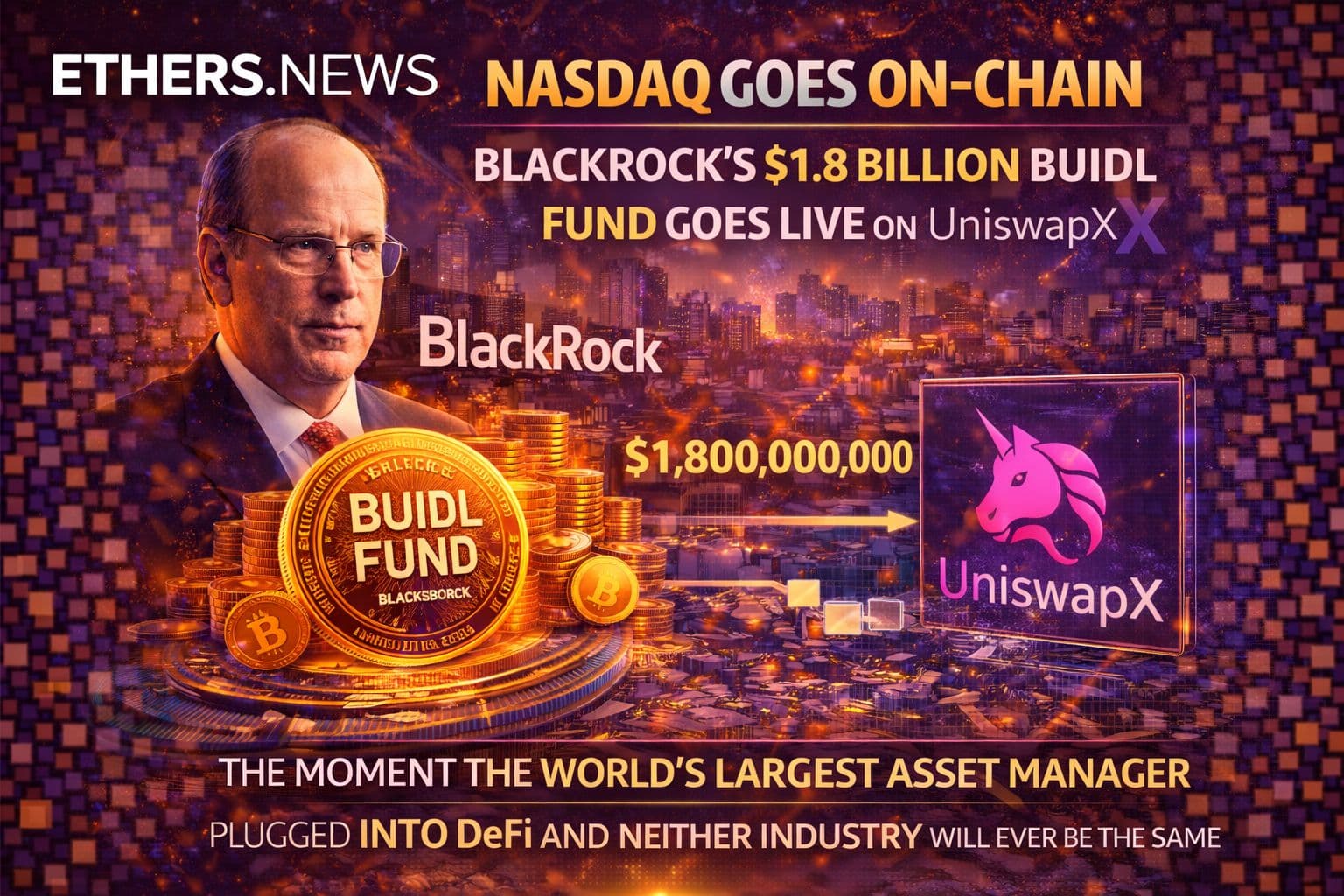
BlackRock's $1.8 Billion BUIDL Fund Goes Live on UniswapX — The Moment the World's Largest Asset Manager Plugged Into DeFi and Neither Industry Will Ever Be the Same
On February 11, 2026, BlackRock — the world's largest asset manager with $14 trillion in assets under management — and tokenization platform Securitize formally integrated BUIDL, the BlackRock USD Institutional Digital Liquidity Fund backed by short-term US Treasuries, into UniswapX, the intents-based swapping infrastructure operated by Uniswap Labs. BUIDL shares now trade on-chain 24/7 via UniswapX's request-for-quote framework, with Flowdesk, Tokka Labs, and Wintermute as whitelisted market makers. Access is limited to qualified purchasers — US investors with $5 million or more in assets. BlackRock simultaneously acquired an undisclosed amount of Uniswap's UNI governance token. UNI surged 15–42% at announcement before retracing. BUIDL's market cap grew 30% in the month following the Uniswap listing. Robert Mitchnick, BlackRock's Global Head of Digital Assets, described the integration as a "major leap forward in the interoperability of tokenized USD yield funds with stablecoins." DeFi total value locked stands at $100 billion.
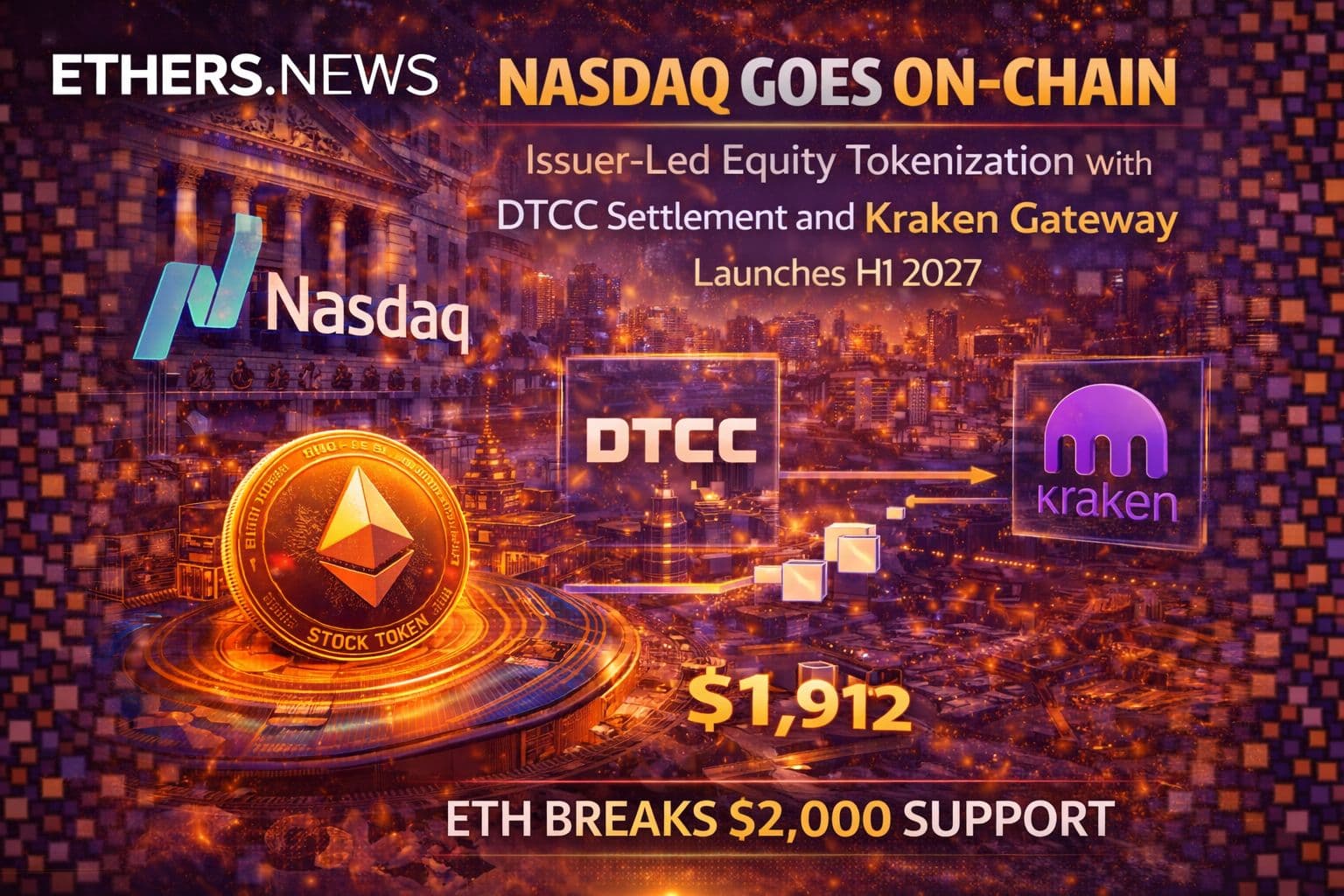
Nasdaq Goes On-Chain: Issuer-Led Equity Tokenization With DTCC Settlement and Kraken Gateway Launches H1 2027 — Wall Street's Most Consequential Market Infrastructure Overhaul in a Generation
On March 8, 2026, Nasdaq officially announced its issuer-led equity token design — the most structurally significant move in US capital market infrastructure since the introduction of electronic trading. Tokenized equities will trade on Nasdaq markets, settle through DTCC/DTC in token form, carry full legal equivalence to traditional shares, and integrate blockchain records directly into official issuer share registries. The SEC granted DTCC a three-year no-action letter on December 11, 2025 — confirmed by Bloomberg — authorizing tokenized stock custody on pre-approved blockchains. Nasdaq's rule filing was published in the Federal Register on January 29, 2026. Kraken (Payward) is Nasdaq's global access gateway partner. The program goes operational in H1 2027. DTCC's permissioned DLT infrastructure uses Hyperledger Besu and the ERC-3643 standard. The global tokenized asset market stands at $28 billion today; Ripple and BCG forecast $18.9 trillion by 2033.
Sonic Labs Launches USSD: RWA-Backed Stablecoin to Rescue a Collapsing DeFi Ecosystem
Amid Sonic's liquidity crisis, USSD stablecoin backed by BlackRock Treasuries launches to restore DeFi stability and attract institutional capital.

Mortgage on the Blockchain: Better-com's Tokenized Home Loan Play Could Rewrite How America Borrows
Better.com is exploring whether home mortgages — America's largest and most illiquid asset class at over USD 13 trillion in outstanding balances — can be tokenized on-chain, opening them to DeFi liquidity pools, fractional institutional investment and automated smart contract servicing. If it works, the implications stretch far beyond one digital lender and into the structural foundations of how housing finance is originated, held, traded and settled globally.
Stablecoin Vulnerabilities: The Hidden Risks Threatening Crypto's $200B Lifeline
Stablecoins underpin $200B+ in DeFi TVL and trillions in annual volume, but Chainalysis reports $3.41B stolen in 2025 alone through exploits, phishing, and bridge hacks—making them the crypto ecosystem’s most targeted asset class. The Saga 2026 exploit, which depegged its stablecoin to $0.75 and wiped 55% of TVL in 24 hours, exemplifies cross‑chain vulnerabilities in modular ecosystems, while classics like Euler ($197M) and Curve ($100M+) expose smart contract flaws that persist despite audits.
Grayscale's AAVE ETF Filing Ignites DeFi TVL Boom: Analyzing the $896M Catalyst for Explosive Growth
As DeFi TVL hits new highs with Aave leading at over $50B, the AAVE ETF emerges as a game-changer, bridging TradFi and decentralized lending for unprecedented growth. Grayscale's February 13, 2026, S-1 filing to convert its $858K Aave Trust into a spot ETF—holding AAVE tokens directly—has analysts projecting a potential 2–5x TVL boost for the DeFi lending leader, drawing parallels to BTC/ETH ETF inflows that added $57B to crypto markets. With Aave dominating 40% of DeFi lending at $15B+ TVL and $100M+ annualized revenue, ETF approval could flood the protocol with fresh liquidity, but governance centralization risks loom as institutions buy voting power.
Grayscale's Spot AAVE ETF Filing: DeFi Goes Institutional
Grayscale Investments submitted Form S-1 to the U.S. SEC on February 13, 2026, to convert its existing Aave Trust (GAVE) into a spot exchange-traded fund, marking the first proposal to bring a DeFi lending protocol's governance token to NYSE Arca. With Coinbase as custodian and a 2.5% sponsor fee payable in AAVE, the filing—following Bitwise's December bid—ignited a 22% token rally from $106 to $128, as markets price in institutional DeFi access and potential SEC clarity on altcoin ETFs.
China’s RWA Tokenization Ban vs. Hong Kong’s Consensus Optimism: Asia’s Crypto Divide Deepens
On February 6, 2026, China’s State Council approved a sweeping formalization of its crypto clampdown, explicitly banning unapproved yuan‑linked stablecoins and curbing onshore real‑world asset (RWA) tokenization projects while instructing mainland firms to pause offshore efforts in Hong Kong. This comes as Hong Kong hosts Consensus 2026—kicking off February 11—with HKMA and SFC touting stablecoin licenses and tokenized green bonds, underscoring Asia’s stark regulatory divergence amid global RWA hype.