
Tag: USD

SEC Officially Ends Crypto Enforcement Era: Binance, Coinbase Cases Dismissed
The U.S. Securities and Exchange Commission under new Chair Paul Atkins has formally dismissed its high-profile lawsuits against Binance and Coinbase, marking the end of nearly a dozen major crypto enforcement actions launched during the Gary Gensler era. This seismic policy shift—coming after the Trump administration's return and Atkins' confirmation—ends years of "regulation by enforcement," clears the path for spot ETF approvals beyond Bitcoin and Ethereum, and signals a new era of crypto-friendly rulemaking that could reshape digital asset markets through 2026 and beyond.

Grayscale's AAVE ETF Filing Ignites DeFi TVL Boom: Analyzing the $896M Catalyst for Explosive Growth
As DeFi TVL hits new highs with Aave leading at over $50B, the AAVE ETF emerges as a game-changer, bridging TradFi and decentralized lending for unprecedented growth. Grayscale's February 13, 2026, S-1 filing to convert its $858K Aave Trust into a spot ETF—holding AAVE tokens directly—has analysts projecting a potential 2–5x TVL boost for the DeFi lending leader, drawing parallels to BTC/ETH ETF inflows that added $57B to crypto markets. With Aave dominating 40% of DeFi lending at $15B+ TVL and $100M+ annualized revenue, ETF approval could flood the protocol with fresh liquidity, but governance centralization risks loom as institutions buy voting power.

XRP’s Real‑World Asset (RWA) Tokenization and “Institutional DeFi” Pivot in 2026
XRP Ledger has quietly become one of the fastest‑growing hubs for tokenized real‑world assets, with RWA volumes up more than 2,000% in 2025 and a fresh institutional DeFi roadmap aimed squarely at banks, asset managers, and regulated lenders in 2026. Partnerships with FCA‑regulated exchange Archax, major fund managers like Aviva and Franklin Templeton, and a dedicated suite of compliance‑first DeFi tools position XRPL for a breakout year—if on‑chain adoption can catch up to the headlines.

Mortgage on the Blockchain: Better-com's Tokenized Home Loan Play Could Rewrite How America Borrows
Better.com is exploring whether home mortgages — America's largest and most illiquid asset class at over USD 13 trillion in outstanding balances — can be tokenized on-chain, opening them to DeFi liquidity pools, fractional institutional investment and automated smart contract servicing. If it works, the implications stretch far beyond one digital lender and into the structural foundations of how housing finance is originated, held, traded and settled globally.
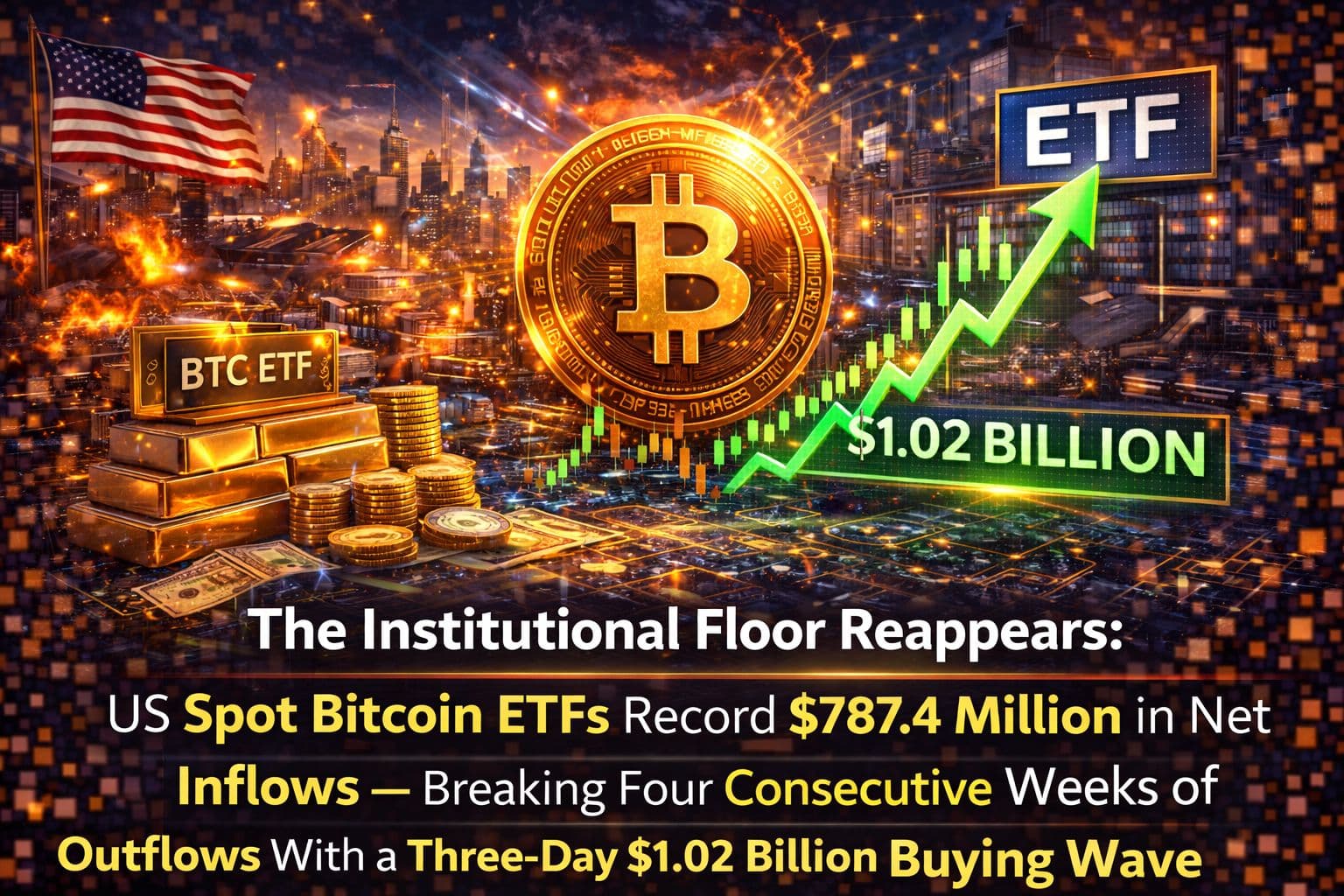
The Institutional Floor Reappears: US Spot Bitcoin ETFs Record $787.4 Million in Net Inflows — Breaking Four Consecutive Weeks of Outflows With a Three-Day $1.02 Billion Buying Wave
After four consecutive weeks of outflows totaling approximately $3.8 billion, US spot Bitcoin ETFs snapped the streak with $787.31 million in net inflows for the week of February 23–27, 2026 — the strongest weekly inflow figure in over a month. BlackRock's IBIT contributed $503 million alone, lifting its cumulative net inflow total to $61.81 billion. A precise three-day buying wave delivered over $1.02 billion in consecutive inflows, with February 25 posting $506.5 million — the largest single-day figure in three weeks. The signal arrived with perfect timing and immediately ran into the hardest possible test: US and Israeli strikes on Iran the very next day.

Dollar on the Blockchain: Trump's Board of Peace Eyes Stablecoins as the Financial Rail for Gaza's Rebuilding
Trump's Board of Peace is reportedly exploring USD-backed stablecoins to power Gaza's reconstruction economy — a move that would simultaneously solve the territory's banking exclusion problem and deepen American financial influence through blockchain infrastructure.

Kevin Warsh Fed Nomination: The Hawkish Shockwave Hitting Crypto
On January 30, 2026, President Donald Trump nominated former Fed Governor Kevin Warsh to replace Jerome Powell as Federal Reserve Chair, effective May 2026 pending Senate confirmation—a move that triggered an immediate 4–6% Bitcoin selloff to $81,045, $817 million in single‑day Bitcoin ETF outflows, and cascading liquidations across leveraged crypto positions. Warsh’s hawkish reputation for monetary discipline, slower rate cuts, and balance‑sheet runoff has markets repricing the “Fed put” as dead, hitting risk assets hard amid already fragile sentiment.

Bitcoin’s Sudden Break Below $65,000: Inside the Tariff Shock, Flow Dynamics and Critical Technical Levels
Bitcoin has abruptly broken below the $65,000 mark after a 4–5% daily slide, extending an already painful drawdown that has wiped out roughly half of its value since the October 2025 peak around $125,000. A confluence of Trump’s surprise move to hike global tariffs to 15%, renewed risk‑off in equities, heavy ETF redemptions and visible whale selling into thin weekend liquidity has dragged BTC into a technically fragile zone where $60,000–$65,000 now separates a standard cycle correction from a full‑blown trend reversal.
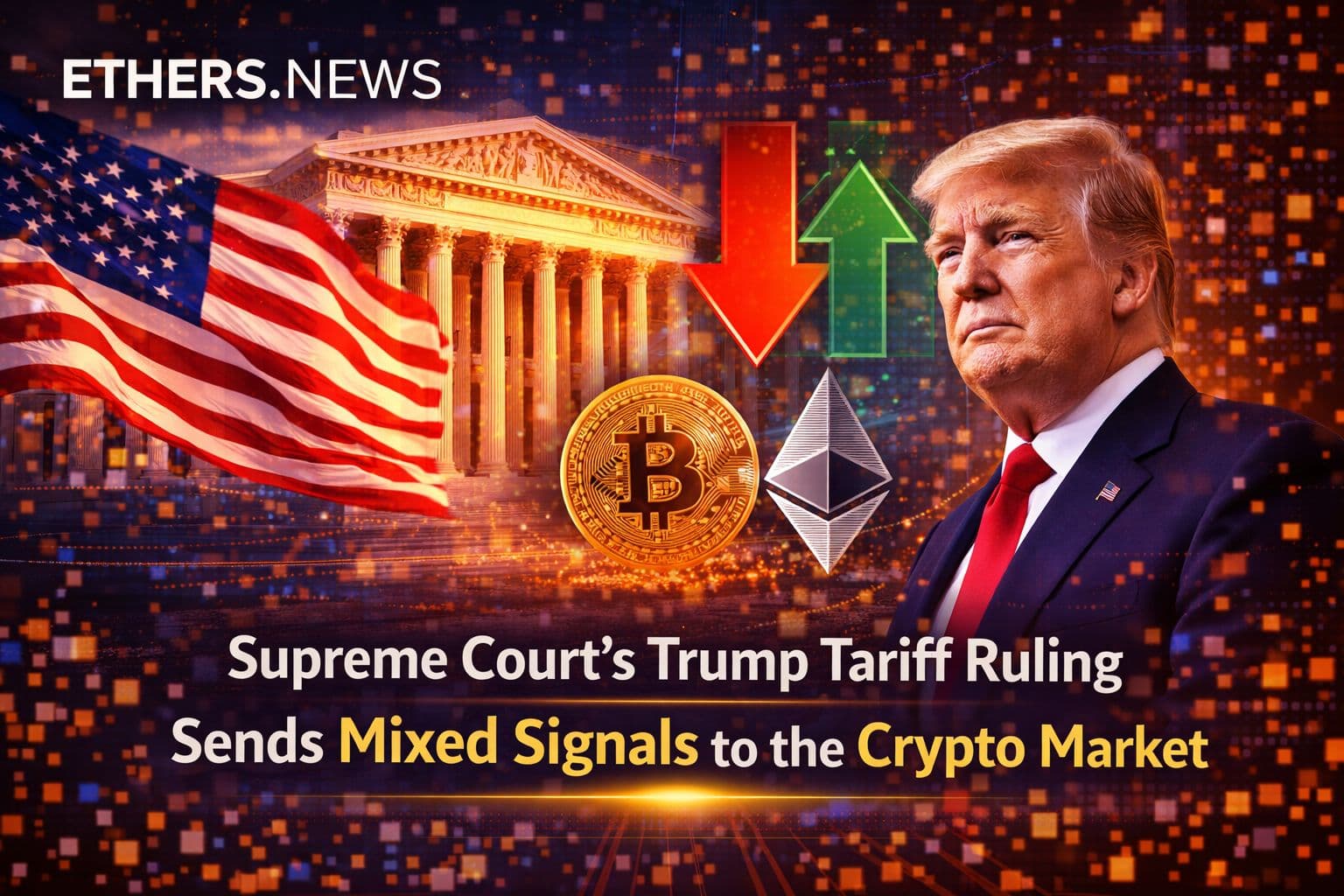
Supreme Court’s Trump Tariff Ruling Sends Mixed Signals to the Crypto Market
The US Supreme Court’s 6–3 decision to invalidate President Donald Trump’s emergency global tariffs under the International Emergency Economic Powers Act (IEEPA) has scrapped one of his signature economic tools and opened the door to potential refunds on more than $100 billion in duties—just as the White House races to reinstall a 10–15% blanket tariff under a different statute. Traditional markets initially cheered the legal curb on tariff powers, while crypto, which sold off sharply on earlier tariff headlines in January, has so far taken the ruling and Trump’s rapid 15% counter‑move in stride, with Bitcoin holding near $68,000 and volatility far below the panic seen during previous trade shocks.

The Ghost of Libra Is Gone: How Meta Is Quietly Building a Payments Empire It Will Never Call Crypto
Meta killed Libra and buried Diem — but it never abandoned the ambition. In 2026, it is rebuilding a global payments infrastructure across its 3.3 billion daily active users through WhatsApp Pay, Instagram checkout and Messenger peer-to-peer transfers, this time without uttering the word crypto once. The strategy is deliberate, the infrastructure is real, and the regulatory lesson from 2019 has been fully absorbed. What emerges looks less like a tech company doing payments and more like a bank that refuses to call itself one.

Grayscale's Spot AAVE ETF Filing: DeFi Goes Institutional
Grayscale Investments submitted Form S-1 to the U.S. SEC on February 13, 2026, to convert its existing Aave Trust (GAVE) into a spot exchange-traded fund, marking the first proposal to bring a DeFi lending protocol's governance token to NYSE Arca. With Coinbase as custodian and a 2.5% sponsor fee payable in AAVE, the filing—following Bitwise's December bid—ignited a 22% token rally from $106 to $128, as markets price in institutional DeFi access and potential SEC clarity on altcoin ETFs.

USDC's Unstoppable Quarter: Circle Shares Surge as Q4 Results Shatter Wall Street Estimates
Circle Internet Group demolished analyst estimates in Q4 2025 — $770 million in revenue up 77% year-over-year, adjusted EPS of $0.43 against a consensus of $0.35, and USDC in circulation growing 72% to $75.3 billion. Shares surged sharply in pre-market trading on February 25, 2026, in the company's most powerful earnings performance since its blockbuster NYSE debut in June 2025. For the stablecoin sector, the message from these numbers is unambiguous: regulated digital dollar infrastructure is not a coming opportunity — it is an already-exploding revenue reality.

America's Crypto Reckoning: The CLARITY Act's March 1 White House Deadline Arrives — What the Most Consequential Digital Asset Bill in US History Means for Bitcoin, DeFi and Institutional Capital
The White House's March 1, 2026 internal deadline to resolve the stablecoin yield dispute holding up the Digital Asset Market Clarity Act has arrived. The Senate Banking Committee has already passed its component. SEC Chairman Paul Atkins publicly endorses the bill. Treasury Secretary Scott Bessent has urged Spring passage. Ripple CEO Brad Garlinghouse gives it 80% odds of enactment by April. Polymarket odds have surged. The CLARITY Act is the most consequential digital asset legislation in US history — and its final obstacle is a single question that has divided the crypto industry from traditional banking for months.

FCA's Stablecoin Sandbox Goes Live: UK Positions for Regulated Crypto Payments Leadership
The Financial Conduct Authority (FCA) has launched a stablecoin-specific cohort within its flagship Regulatory Sandbox, inviting issuers to test live GBP-pegged stablecoins under supervision—ahead of the full regime rollout expected in late 2026. With applications closed on January 18, selected firms are now live-testing issuance, redemption, and payments using real market data, directly informing prudential rules, reserve requirements, and consumer protections for what FCA Executive Director David Geale calls a "priority" for faster, more convenient UK payments.

Stablecoin Vulnerabilities: The Hidden Risks Threatening Crypto's $200B Lifeline
Stablecoins underpin $200B+ in DeFi TVL and trillions in annual volume, but Chainalysis reports $3.41B stolen in 2025 alone through exploits, phishing, and bridge hacks—making them the crypto ecosystem’s most targeted asset class. The Saga 2026 exploit, which depegged its stablecoin to $0.75 and wiped 55% of TVL in 24 hours, exemplifies cross‑chain vulnerabilities in modular ecosystems, while classics like Euler ($197M) and Curve ($100M+) expose smart contract flaws that persist despite audits.

Stablecoins in Business: The 2026 Revolution Transforming Global Operations
Stablecoins have matured into essential business infrastructure in 2026, powering instant cross-border payments, programmable treasury management, supply chain automation, and AI-driven micropayments for enterprises worldwide. With $300B+ in market cap and regulatory clarity from MiCA, GENIUS Act, and FCA priorities, companies like Shopify, JPMorgan, Stripe, and Visa leverage USDC, PYUSD, and USDT to slash costs by 80%, eliminate remittance friction, and unlock $4T in tokenized opportunities.